

A backyard pond adds beauty to your outdoor space and creates a peaceful environment while attracting wildlife. Whether you want a small natural pond or a larger koi pond with a waterfall, proper planning is essential. This guide will take you through each step, from selecting the best location to maintaining your pond for years.
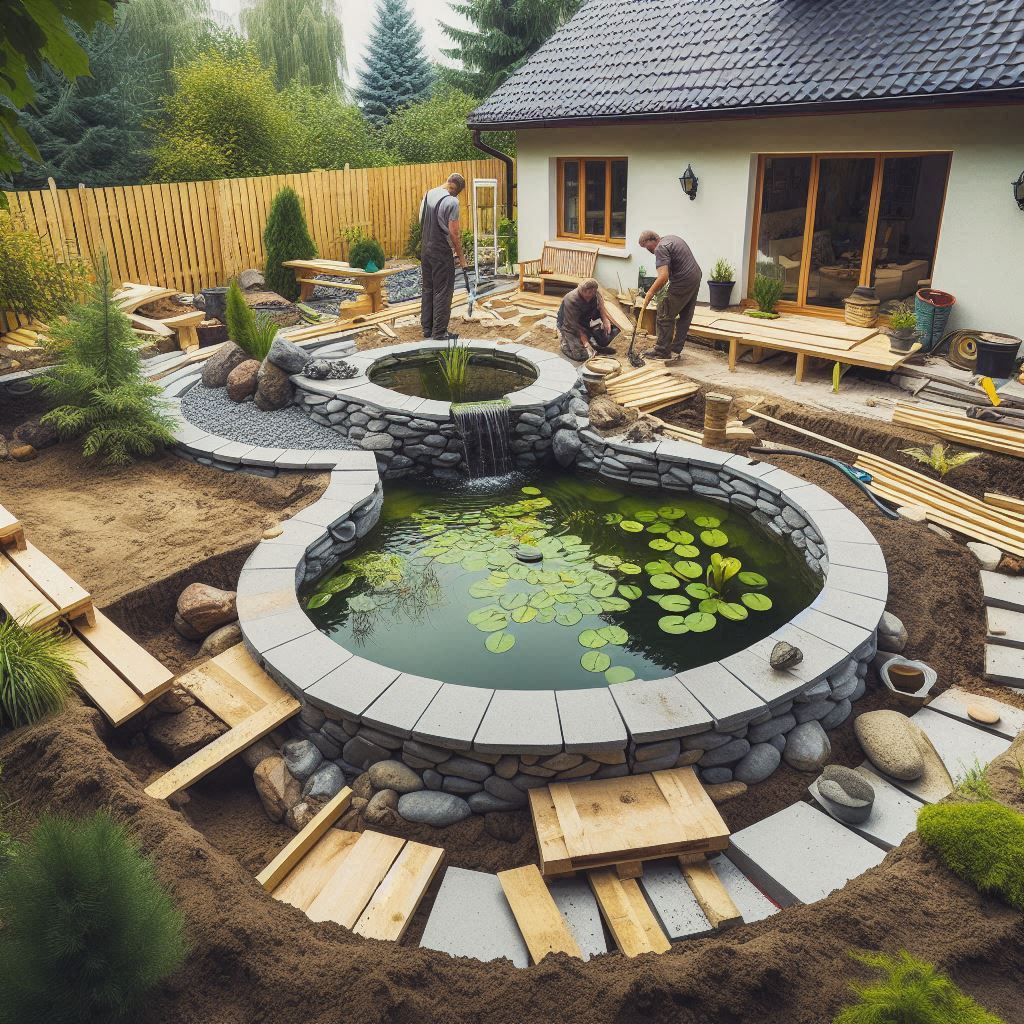
Step 1: Planning Your Pond
Choosing the Best Location
Picking the right spot is key to a successful pond. Consider these factors:
- Sunlight Exposure – Aim for 4–6 hours of sunlight daily. Too much can cause algae growth, while too little may hinder plant growth.
- Avoid Trees and Roots – Falling leaves can dirty the water, and tree roots may damage the liner.
- Close to a Power Source – If using a pump, filter, or lights, place the pond near an electrical outlet.
- Natural Slopes – Low areas may collect water naturally but might need drainage adjustments.
Choosing the Type of Pond
- Wildlife Pond – A self-sustaining pond that attracts birds, frogs, and insects.
- Koi or Fish Pond – Needs deeper water (at least 3 feet) and a filter system.
- Decorative Water Garden – Focuses on aquatic plants and visual appeal.
Step 2: Designing Your Pond
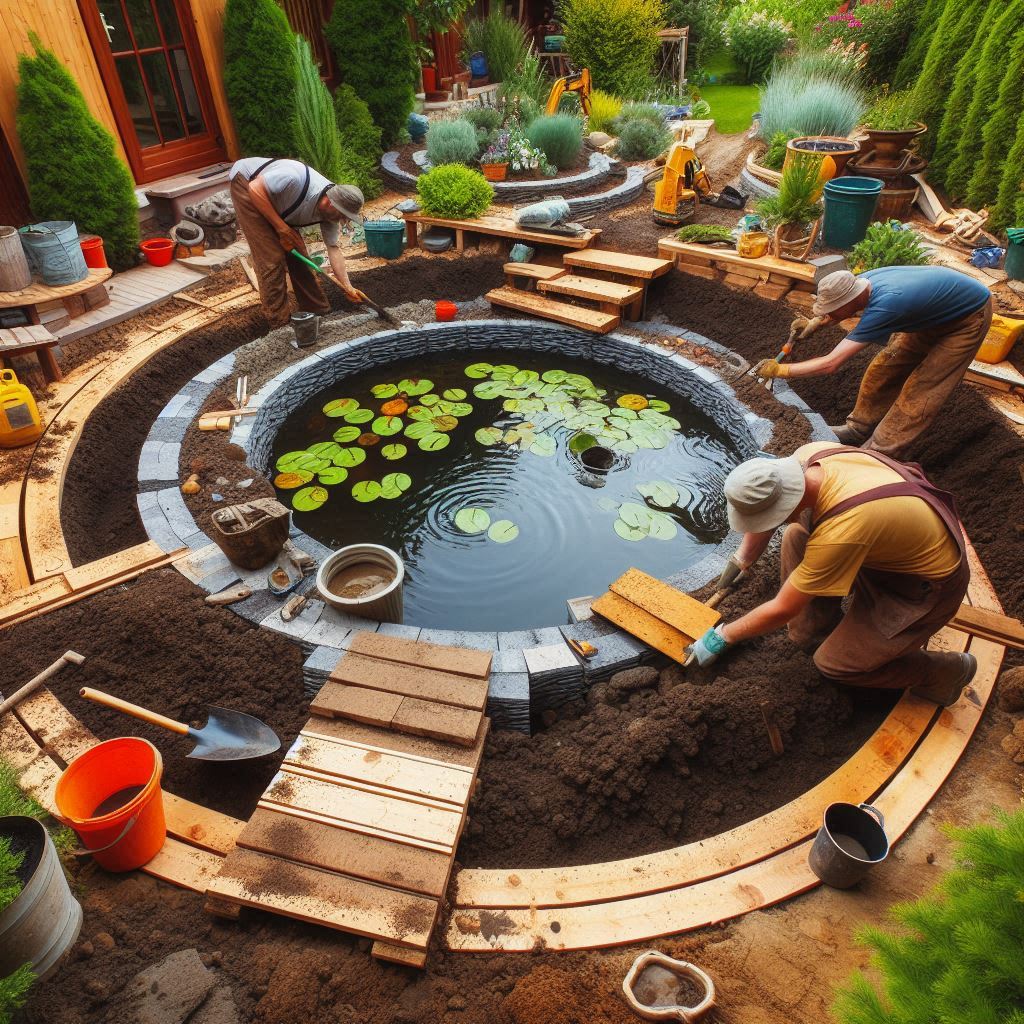
Deciding on Size and Depth
| Pond Type | Depth | Best For |
| Wildlife Pond | 18–24 in | Birds, frogs, insects |
| Koi Pond | 36–48 in | Large ornamental fish |
| Water Garden | 12–24 in | Water lilies, floating plants |
Choosing Materials
- Pre-formed Liners – Easy to install but limited in shape.
- Flexible Liners (EPDM/PVC) – Great for custom shapes.
- Concrete Ponds – Long-lasting but require more work and cost.
Step 3: Digging and Installing the Pond
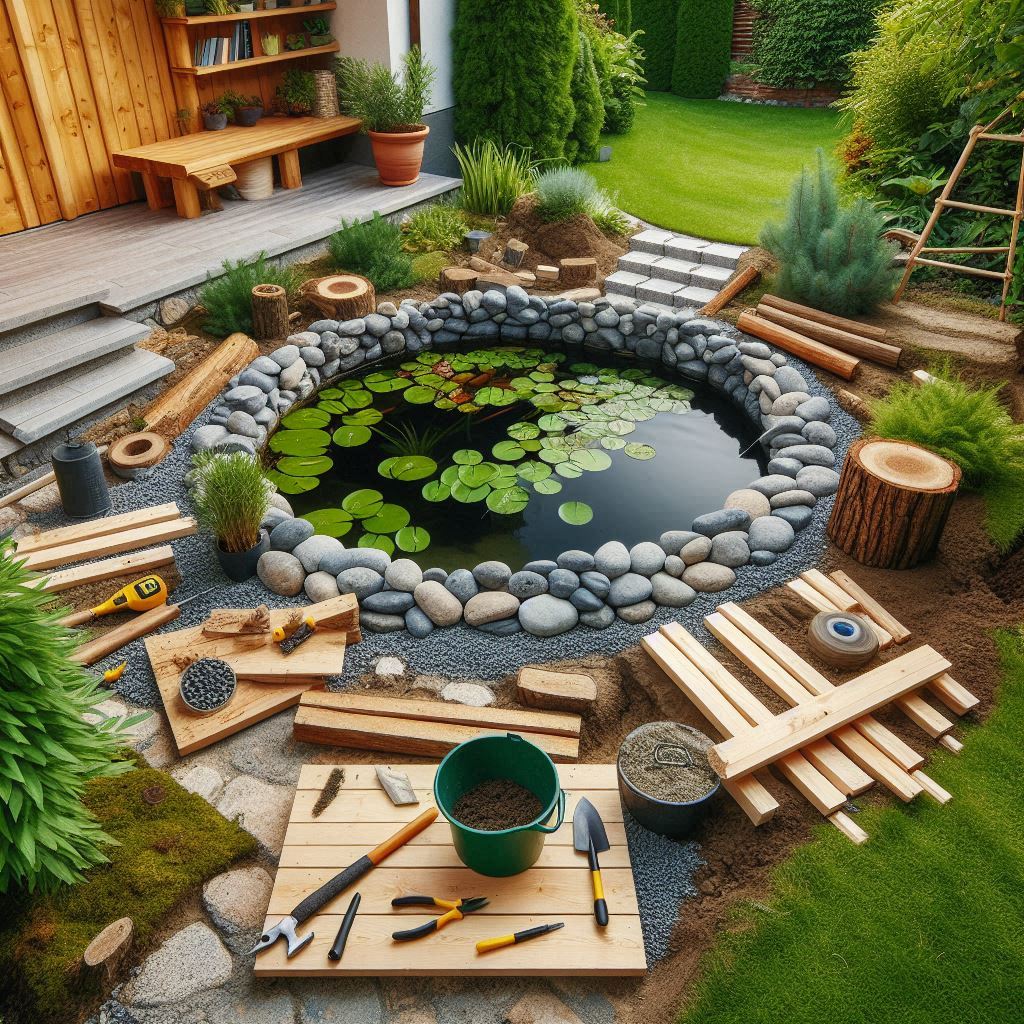
Digging the Pond
- Outline the Shape – Use rope or spray paint to mark it out.
- Dig in Steps – Create shallow shelves for plants.
- Level the Bottom – Prevents uneven water distribution.
Installing the Liner
- Clear any sharp objects from the hole.
- Lay a protective underlayer (old carpet or pond fabric).
- Spread the liner and press it into place.
- Add a little water to help set it before securing the edges.
Step 4: Adding Water and Filtration
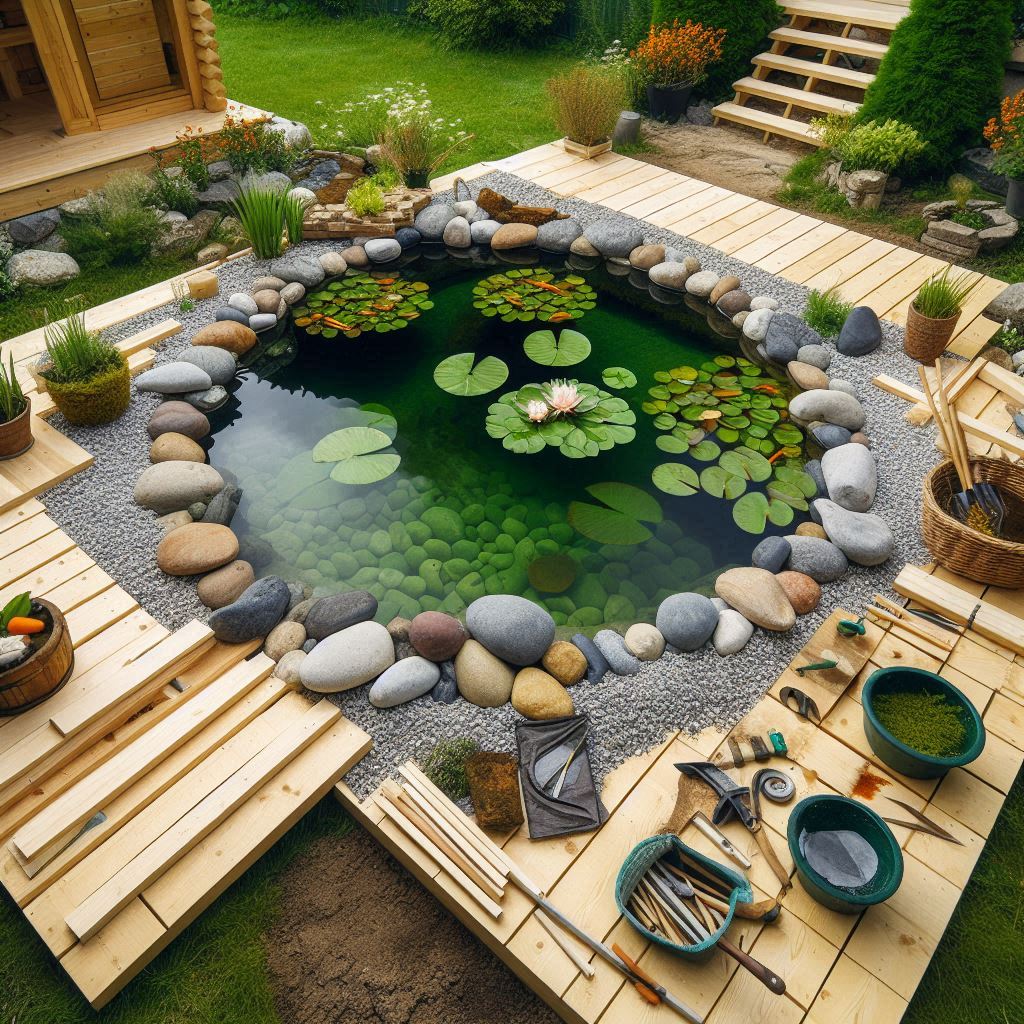
Filling the Pond
- Rainwater is best to avoid chemicals.
- Tap water needs treatment – Let it sit for 24 hours or use a dechlorinator.
Choosing a Filtration System
- Biological Filters – Promote good bacteria to break down waste.
- Mechanical Filters – Remove debris and dirt.
- UV Clarifiers – Prevent algae overgrowth.
Adding an Aeration System
To keep water oxygenated, install a pump, fountain, or waterfall.
Step 5: Landscaping and Adding Plants
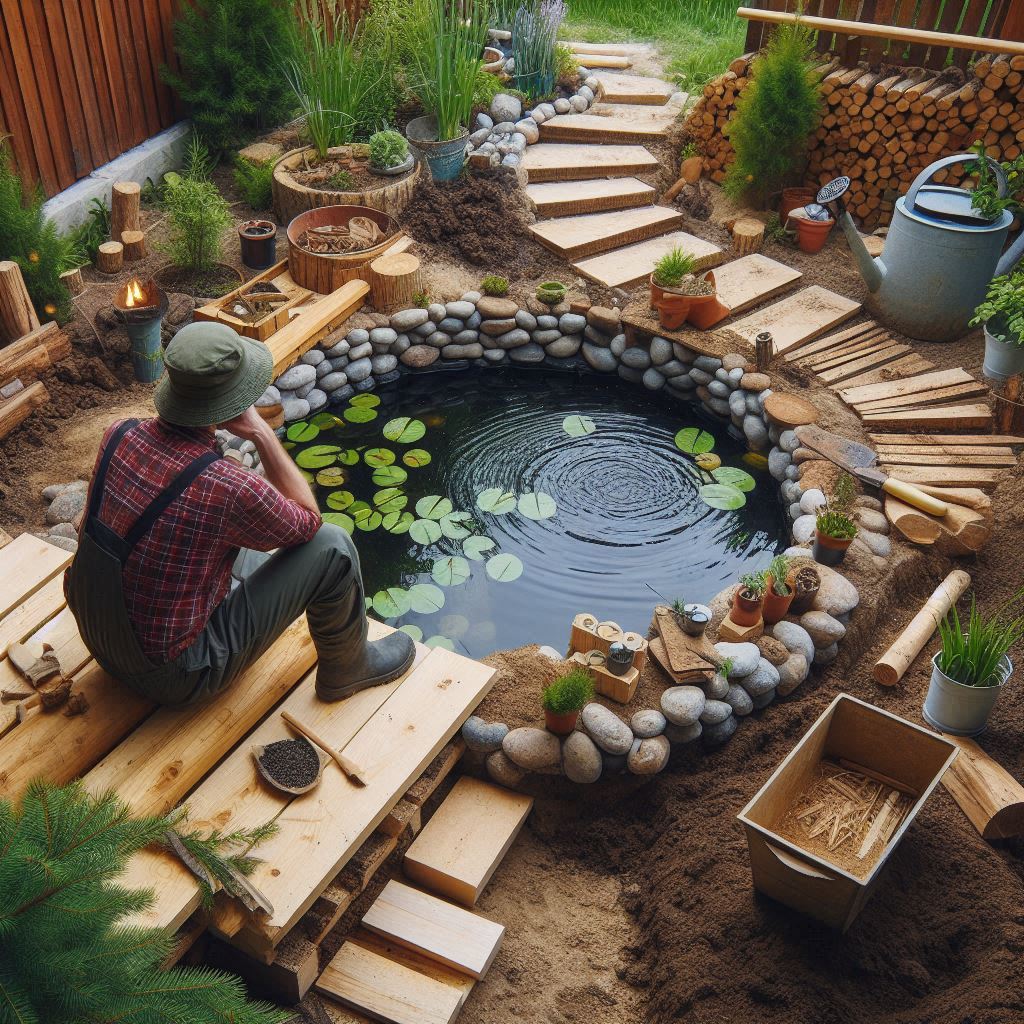
Best Plants for a Pond
| Type | Examples | Purpose |
| Floating Plants | Water lilies, duckweed | Shade and algae control |
| Submerged Plants | Hornwort, anacharis | Oxygenate the water |
| Marginal Plants | Iris, cattails, pickerelweed | Shelter for wildlife |
Use a mix of these to create a balanced pond ecosystem.
Step 6: Adding Fish and Attracting Wildlife
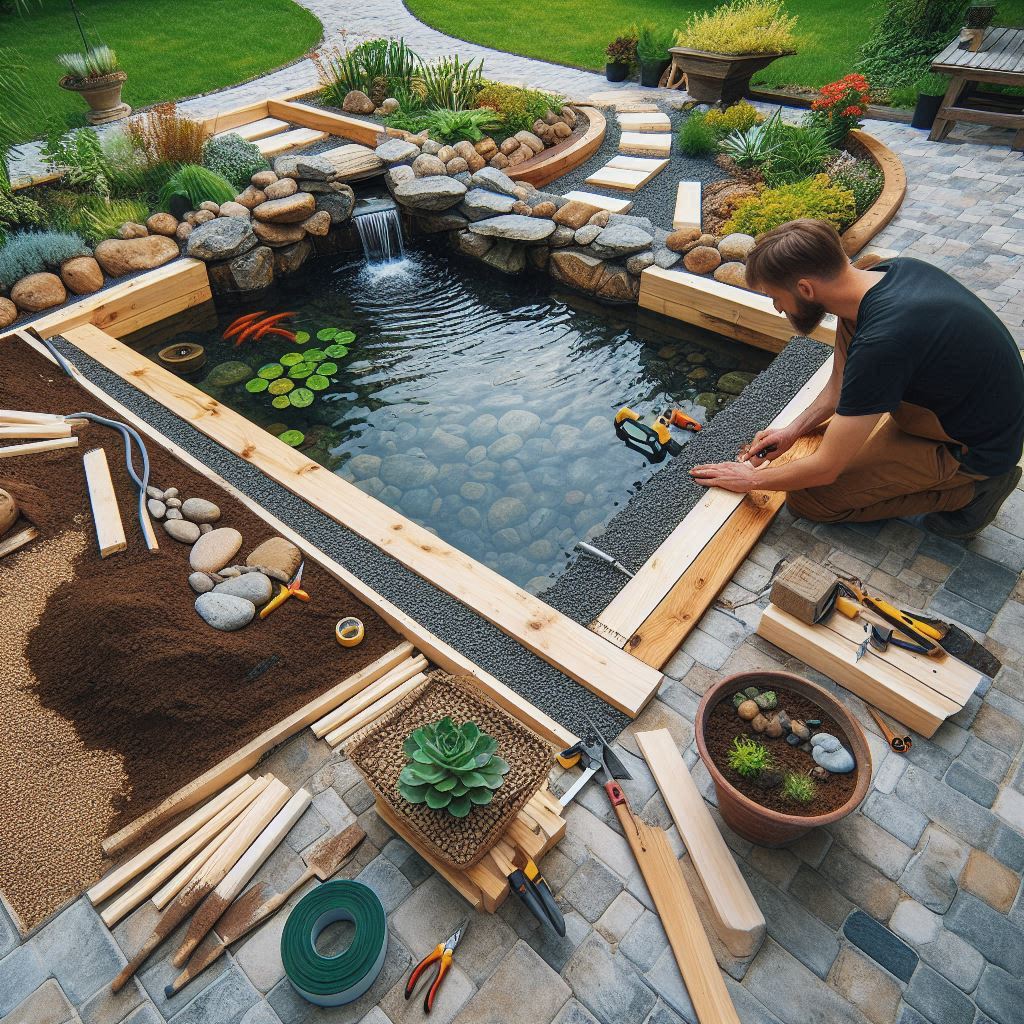
Choosing Fish
- Koi – Stunning but need a large, well-filtered pond.
- Goldfish – Easier to care for and good for smaller ponds.
- Mosquitofish – Help control mosquito larvae.
Encouraging Wildlife
- Add rocks, logs, and shallow edges for animals.
- Avoid pesticides near the pond.
- Place a small ramp for easy access to and from the water.
Step 7: Pond Maintenance
Routine Maintenance
- Check Water Quality – Test pH, ammonia, and nitrate levels monthly.
- Clean Filters – Rinse mechanical filters every 2–4 weeks.
- Remove Debris – Use a net to collect leaves and algae.
- Winter Care – Use a heater or aerator to prevent freezing if you have fish.
Conclusion
A pond brings life and beauty to any yard. With good planning, the right plants and fish, and regular care, you can enjoy a thriving water feature for years. Whether you want a natural wildlife pond or a koi pond, this guide helps you build and maintain it with ease.
Are you planning to build a pond? Share your ideas in the comments!


